
ISSUE 02 / SEP 21, 2026
This week in enterprise AI: what happened, why it matters, what I'd do.
The model is
the easy part.
AT&T, Goodyear, Shopify and Novo Nordisk show where the value comes from: routing, trusted data and AI used in the open.
|
■ FROM THE PEOPLE DOING IT “I actually call it return on learning. It's not ROI.” Raman Mehta, CIO, Goodyear |
|
PATTERN WATCH Goodyear and Novo Nordisk hit the same wall from different sides: AI is only as good as the company data underneath it. Goodyear is using quick wins to pay for fixing it. |
|
|
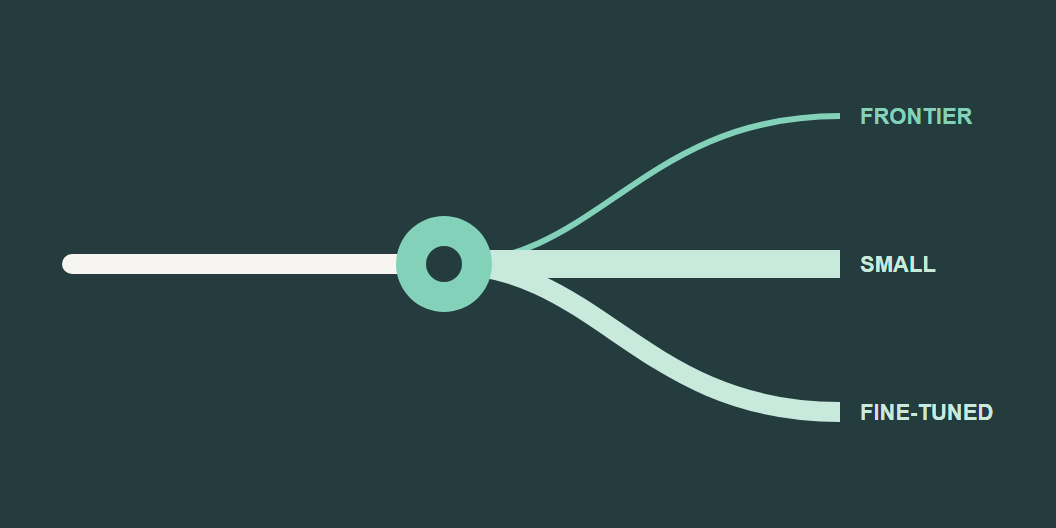
Every story this week is about what sits around the model: how work is routed to it, the data it reads, and whether people can see each other using it. None of the four got its result by buying a better model.
— Manny
|
| THIS WEEK'S THREE STORIES |
|
|
■ CASE STUDY · TELECOM
AT&T: a 5x cash return on AI last year.
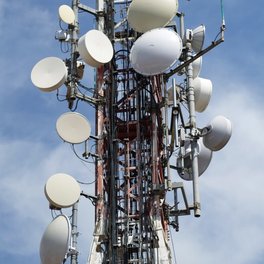
What happened AT&T's chief data and AI officer, Andy Markus, says the company made five times its AI investment back in cash last year. It built its platform to swap models freely, betting its edge is its own data. It has more than 1,000 agent workflows being built or in production, yet tries to keep the number of agents low by making each one multi-purpose. A gateway routes simpler requests to older, cheaper models, and “a lot” of the sub-agents its main agents call are small language models. Markus says those small models save 90% of the cost; AT&T runs 45 billion tokens a day.
Why it matters Much of AT&T's saving comes from sending work to cheaper and smaller models. Most companies do the opposite: one premium model for everything, hidden in a single “AI spend” line.
WHAT I’D DO Ask for AI cost per workflow, not one total. For each workflow, ask whether a cheaper model would do the job just as well. |
TO MAKE THIS WORK First: Tag every AI call to the workflow it serves from the day that workflow goes live. It's much harder to split costs afterward. As you do it: Have finance check the return on your three biggest workflows, not just the total. Then: Put cost per workflow on the monthly operating review, so you recheck the routing as model prices change. |
Read the source →CIO.com, Sep 16, 2026
I wrote about this: My model-cost experiment: routing beat the premium default →
BY ROLE Finance and risk: Give each AI workflow its own cost line, and ask whether it would survive being costed on its own. Technology and data: Put a gateway in front of all AI calls so simple tasks go to smaller models, and retest the routing every quarter. Executive sponsor: Keep the platform able to switch models. AT&T is betting its edge is its own data, not its model. | BEHIND THE NUMBERS In the same article, New York Life Group Benefits built its own AI platform on AWS with open-source tools and Anthropic models, and avoids AI built into platforms like Salesforce. It uses agents to gather evidence for its SOC 1 and SOC 2 audits. Deloitte finds only 2% of firms use agents extensively. | HOW SOLID IS THIS Company-reported to CIO.com. The 5x cash return is AT&T's own figure and isn't audited. |
|
|
|
■ CASE STUDY · MANUFACTURING
Goodyear's CIO wants failed pilots killed fast, and calls it “return on learning.”

What happened Goodyear CIO Raman Mehta spent his first six months on “lighthouse” AI projects in supply chain, manufacturing and finance, each with a senior business sponsor. The same projects take on the unglamorous work: AI data agents are cleaning master data for customers, suppliers and product bills of materials. He wants every technologist to spend at least 10% of their time tracking what's new in AI, and pilots that don't work killed quickly and counted as learning, not as failed ROI.
Why it matters Most AI programs stall on data nobody trusts. Goodyear is pairing quick, sponsored wins with the master-data clean-up every later use case depends on, and Mehta wants what doesn't work stopped rather than left to drift.
WHAT I’D DO Pick one master-data entity your AI work depends on (customer, supplier or product) and name a business owner for what “correct” looks like. |
TO MAKE THIS WORK First: Name the master data each pilot depends on, and its business owner, before the pilot starts. As you do it: Set the result and the date that decide each pilot, and have the sponsor make the call. Then: When a pilot passes, fund the training and support to take it past the pilot team. |
Read the source →Technovation with Peter High, "Goodyear CIO Raman Mehta on Making Speed the Strategy for Enterprise AI", Sep 17, 2026
BY ROLE Executive sponsor: Sponsor one lighthouse project in your own function, and agree up front what result would mean you kill it. Technology and data: Clean master data inside each lighthouse project, not as a separate multi-year program. Transformation lead: Report killed pilots as lessons learned, so people stop hiding the ones that aren't working. | BEHIND THE NUMBERS Mehta is moving Goodyear from project IT to product IT: each technology product is tied to a business domain, has a business counterpart and has its own KPIs. He wants governed data products with guaranteed quality and security, so business experts can build agent workflows without solving data plumbing. He says agents need kill switches. | HOW SOLID IS THIS A CIO describing his own program on a podcast. No figures given. |
|
|
|
■ CASE STUDY · E-COMMERCE
Shopify's CEO says an AI agent may now write up to half its code changes. It also created “slop grenades.”

What happened Shopify CEO Tobi Lütke says an internal agent called River now creates “probably up to about fifty percent” of the company's pull requests, the code changes behind every production update. River lives in Slack, where about 7,000 staff work across some 10,000 channels, and it only works in open channels, so people learn by watching each other use it. There's a cost. People now toss unreviewed AI output at colleagues, which Shopify calls “slop grenades”. Lütke says lazy work used to mean too little output; now it means too much.
Why it matters Producing work got cheap; reviewing it didn't. Shopify's open channels spread good habits fast, and “slop grenades” show where the bill lands: on whoever has to check the output.
WHAT I’D DO Track how often AI-assisted work is accepted on first review. If it's falling, make it a rule that people check their own AI output before anyone else sees it. |
TO MAKE THIS WORK First: Ask the people already getting results to work in the open first. Colleagues copy peers faster than they absorb a course. As you do it: Show your team examples of good and poor AI output, and say who checks the work before it ships. Then: As access widens, track one outcome per team next to usage, so you can see which teams turned use into results. |
Read the source →The Knowledge Project, "Tobi Lütke: The Skills AI Makes More Valuable", Sep 15, 2026
BY ROLE People managers: Use AI in shared spaces so your team learns by watching, and send back AI output that arrives unchecked. HR and L&D: Make “you own and check your AI output” part of how work is judged, not just a guideline. Technology and data: Measure how many AI-generated code changes are accepted first time, not just how many there are. | BEHIND THE NUMBERS Lütke uses an AI “chief of staff” that convenes a small council of expert sub-agents across several frontier models and, for $15–20 in tokens, returns in about half an hour what could take a month of research. His caution: machines can't take responsibility, so people have to stay at the points where decisions are made. | HOW SOLID IS THIS Shopify's CEO describing his own company on a podcast. “About half” is his estimate. |
|
|
Clinical-trial answers in minutes, not weeks. Databricks CEO Ali Ghodsi says most companies still use AI as a search box and a coding aid. The blocker isn't model quality; it's that AI doesn't know how the company works.
The a16z Show, "Databricks CEO on AI Pacing, Cyber Risk, and the Enterprise", Sep 18, 2026 Act: “The agent made me do it” won't be a defense. PwC's global chief AI officer says companies will answer for what their agents do, and that every department head, not IT alone, must track the agents in their function. Cisco approves employee-built agents centrally (about 700 so far) and won't authorize agents sold by third-party vendors. Zscaler's CISO calls AI a new form of insider risk. Decide who in each function answers for its agents.
Fortune, Sep 16, 2026 A Fortune 500 manufacturer cut its planning cycle from 30 days to 3. McKinsey found the actual work took 12–24 hours; handoffs added 9–18 days of waiting. Redesigning those handoffs made planning 10x faster.
McKinsey, Sep 18, 2026 |
|
What are you being asked to decide about AI, or where is a change stuck? Send me your question. I’ll answer the best ones in future issues, and I never use your name. |
|
■ TRANSNOVA.AI
Where is your team stuck?
AI isn’t the transformation. Redesigning the work is. Transnova.ai, my firm, finds the workflow that keeps slowing your team down, redesigns it, and measures the result.
|
|
Invite me to speak · Connect on LinkedIn
|
|

